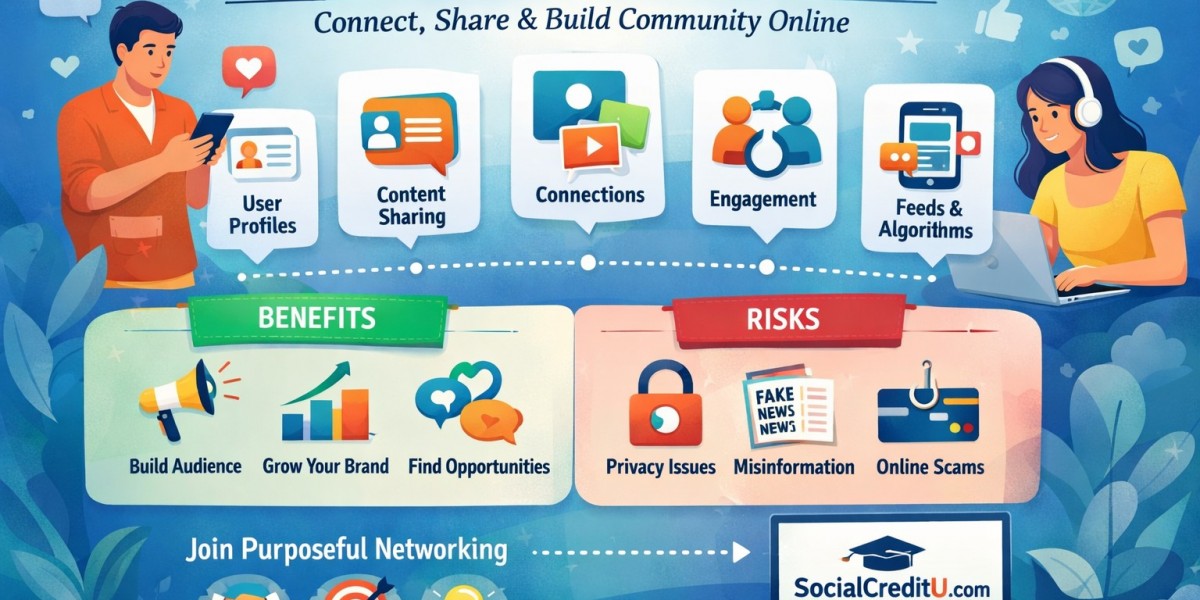

Social networking sites are websites or apps designed to help people connect, communicate, and share information with others. They allow users to build a digital identity (a profile), interact with friends or followers, join communities, and publish content—like posts, photos, videos, and messages.
In simple terms: social networking sites are digital spaces where relationships and communities happen online.
The Core Features of Social Networking Sites
Most social networking platforms share a few common building blocks:
1) User Profiles
A profile is your “online identity card.” It can include your name (or brand name), photos, bio, interests, links, and activity.
2) Connections
Platforms let you connect through:
Friends (mutual connections)
Followers (one-way connections)
Groups/communities (shared interests)
3) Content Sharing
Users share things like:
Text posts and updates
Photos, reels, and videos
Stories (short-lived content)
Links to articles, products, or websites
4) Engagement Tools
Engagement is how people interact:
Likes and reactions
Comments and replies
Shares and reposts
Direct messages (DMs)
5) Feeds and Algorithms
Instead of showing content in perfect chronological order, many platforms use algorithms to decide what you see—based on what you engage with most.
Types of Social Networking Sites (It’s More Than “Social Media”)
Not all social networking sites are the same. Here are the main categories:
Social Networks (General)
These focus on broad connecting and posting.
Personal updates, entertainment, communities, trending topics
Professional Networks
These focus on careers, recruiting, and business networking.
Resumes, portfolios, industry content, professional messaging
Media Sharing Networks
These focus on photos and video content.
Short-form videos, creators, brands, storytelling
Community & Discussion Networks
These focus on conversations, niche topics, and groups.
Forums, Q&A, interest-based communities
Private & Messaging-Based Networks
These focus on group chat, direct communication, and private communities.
Why People Use Social Networking Sites
Social networking sites are popular because they help people:
Stay connected with friends, family, and communities
Build an audience around a brand, cause, or personal identity
Learn quickly through shared knowledge and trends
Market products/services with organic content and paid ads
Find opportunities like jobs, partnerships, or customers
Build trust through consistent presence and engagement
For businesses especially, social networking sites can function like a public reputation engine: people check your content to decide whether you’re legit.
Benefits of Social Networking Sites
When used intentionally, social networking sites can be powerful:
Community building: Create groups around shared goals or interests
Brand growth: Build visibility without needing a huge budget
Traffic generation: Push people to your website, offers, or content
Customer feedback: Learn what people want faster than surveys
Support systems: Find like-minded people and peer encouragement
Risks and Downsides (Because the Internet Has Teeth)
Social networking sites also come with real trade-offs:
Privacy concerns: Data collection and tracking are common
Scams and impersonation: Fake profiles and shady links exist
Misinformation: Viral doesn’t mean true
Addiction loops: Platforms reward doomscrolling
Reputation damage: One bad post can travel fast
Smart move: treat your social presence like a public storefront. If you wouldn’t paint it on the side of your car, don’t post it.
Social Networking Sites and Online Opportunity Culture
Social networking platforms have become major hubs for:
Entrepreneurs and side hustles
Affiliate marketing
Online education
Community-driven earning models
Networking for partnerships
That’s where platforms like SocialCreditU.com can fit into the conversation.
Where SocialCreditU.com Fits In
SocialCreditU.com can be positioned as part of the “community + opportunity” side of social networking—where the goal isn’t just posting for likes, but building connections around growth, visibility, and progress.
Depending on how you structure it, SocialCreditU.com can function like a specialized social network that focuses on:
Building communities around shared goals
Encouraging engagement that supports discovery
Helping users connect, learn, and potentially collaborate
Creating a more structured environment than random broad platforms
In other words: rather than being “everything for everyone,” SocialCreditU.com can serve a targeted mission—helping people network with purpose.
How to Use Social Networking Sites Effectively (Personal or Business)
Here’s the simple playbook:
Pick your lane (education, entertainment, motivation, business, lifestyle, etc.)
Post consistently (even 3x/week beats 30 posts once a month)
Engage on purpose (comments and replies build faster than posts alone)
Use clear calls-to-action (visit your site, join your group, watch the video, etc.)
Protect your brand (avoid drama, misinformation, and messy arguments)
Track what works (which posts lead to clicks, followers, sign-ups?)
Final Thoughts
Social networking sites are modern public squares—where attention, community, and trust are built in real time. Used wisely, they can grow relationships, businesses, and opportunities. Used carelessly… they can also turn your brain into mashed potatoes.
If you’re building something with a focused purpose—like SocialCreditU.com—the key is clarity: define what the community is for, who it serves, and what success looks like for the people using it.